|
|||||||||||||||||||||||||||||||||||||||||||||||||||||||||||||||||||
       |
|||||||||||||||||||||||||||||||||||||||||||||||||||||||||||||||||||
Lllactapata (Llaqtapata)Location: Rediscover Machu Picchu > Peru & the Andes > Llactapata (Llaqtapata) -----------------------------------------------------------------------------------------------------------------------------------------------------------------------------------------------------------------
Lost, Discovered, Lost Again and Rediscovered...
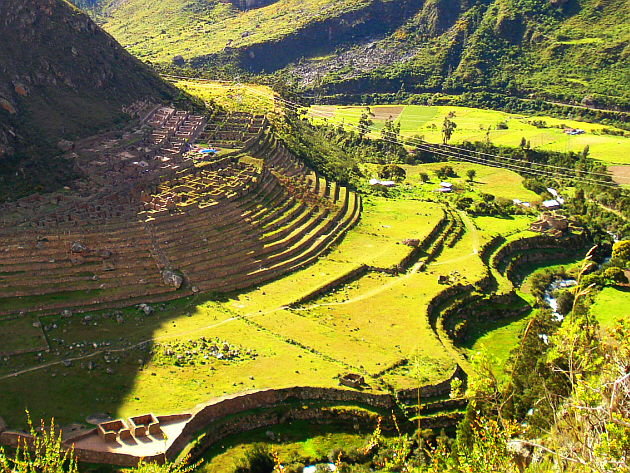
Patallacta, an Inca complex with peculiar forms in the lush green Urubamba Valley
The complex of Llactapata is located in the Urubamba Valley. These ruins are near to the Vilcanota River, and not too far away from Machu Picchu.
In scientific resources and newspapers, magazines, there are several archaeological sites called "Llactapata". They are not always the same. Confusions might occur.
The site we are presenting in this article is the one located in the proximity of the km 88 mark near the rail tracks that run from Cuzco (Cusco) to the town of Aguas Calientes.
Patallacta (seen on the image above) is closer to the railway tracks, while Llactapata is situated on higher ground and is a smaller archaeological site. The two sites are linked with each other. Although, they are not the same, the site called Patallacta is most often depicted as "Llactapata" on many photographs in magazines. The Inca Trail runs between them, leading to Machu Picchu.
The word "llacta" means "town", while "pata" means "height". It is believed that a high-ranked Inca had ordered the construction of Llactapata and that the place must have had some connection with Machu Picchu (located further northwest).
Bingham had many difficulties in uncovering the ruins from the dense vegetation. The nearby Aobamba Valley near Llactapata was also infested with poisonous snakes. The height of the trees also prevented clear observations, even though the team had put enormous efforts into chopping the vegetation down with machetes in order to pass through. Shortly after discovery, the ruins of Llactapata were left and covered again by vegetation.
The Llactapata site was thoroughly examined by the Thomson-Ziegler expedition in 2003. It was determined that Llactapata was an important place near the Inca
Trail leading to Machu Picchu. Probably it was a shrine. The larger complex of Patallacta is locate further north and includes about one hundred buildings. Nevertheless the Patallacta site is more beautiful to the arriving tourist. Some specialists believe that Patallacta was an agricultural complex.
|
|
||||||||||||||||||||||||||||||||||||||||||||||||||||||||||||||||||
 |
|||||||||||||||||||||||||||||||||||||||||||||||||||||||||||||||||||
 |
|||||||||||||||||||||||||||||||||||||||||||||||||||||||||||||||||||
 |
|||||||||||||||||||||||||||||||||||||||||||||||||||||||||||||||||||
|
|||||||||||||||||||||||||||||||||||||||||||||||||||||||||||||||||||
 |
|||||||||||||||||||||||||||||||||||||||||||||||||||||||||||||||||||


 Llactapata
was discovered by Hiram Bingham in 1912, a short time after he had come
across the ruins of great Machu Picchu
Llactapata
was discovered by Hiram Bingham in 1912, a short time after he had come
across the ruins of great Machu Picchu