|
|||||||||||||||||||||||||||||||||||||||||||||||||||||||||||||||||||
       |
|||||||||||||||||||||||||||||||||||||||||||||||||||||||||||||||||||
The Construction of Machu PicchuLocation: Rediscover Machu Picchu > Machu Picchu > The Construction of Machu Picchu -----------------------------------------------------------------------------------------------------------------------------------------------------------------------------------------------------------------
How Did the Incas Build Machu Picchu?
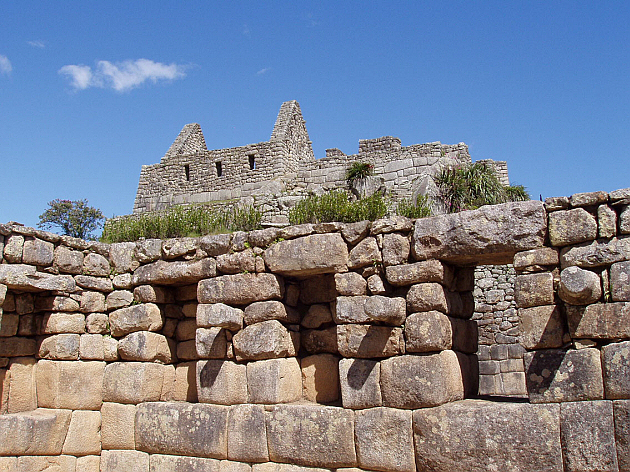
Machu Picchu: niches in the walls were used during religious rituals
There are more questions than responses to how the spectacular Inca city was constructed. In this article we are taking a look at the possible problems that the Incas had to overcome, the construction skills that they had... and we are also going to look at some theories...
The Strategic Location and the Purpose of Construction
The city is situated 2.450 m (8.038 ft) above sea level in the Peruvian Andes. In an area known as the Vilcabamba, once densely covered in forests and full of poisonous snakes.
The Inca Ruler Pachacuti was the one behind the construction of Machu Picchu. In the mid 1400s the city must have been standing already on the mountain called today "Old Peak" - literally translated from the original Quechuan name of Machu Picchu. Yes, it is the peak's name, not the city's.
The Incas could observe what is going on below in the Urubamba Valley below where the river with the same name runs around the mountain. The strategic location adds to the protection of the city: the Incas could observe potential enemy forces moving below in the valley, but those below could not see that there is a city on top!
The city of Machu Picchu is most often referred to as "citadel"... this makes us think of a fortress, which Machu Picchu is not. It wasn't built for military scopes, but it does have a very well defendable location. It could be a good observation place, a retreat, but in no case a military city. Its isolation and the way it was planned and constructed clearly reflects a civilian use.
American archaeologist, Gary Ziegler says that Machu Picchu was a religious sanctuary of the Incas and the even at the time of its completion, it was kept secret from other Incas as well.
Construction Techniques
The plateau on which the city was built was also the place where the construction materials were extracted. The rock quarry - this can still be found in the city of Machu Picchu. So, the Incas had no major difficulties in constructing the stone blocks. The majority of construction bricks, rocks are rather small, unlike in the case of Ollantaytambo and Sacsayhuamán.
About 5.000 people must have worked to build Machu Picchu - specialists say. But it could only accommodate 750 - 1.000 inhabitants. Strangely there were only about 200 - 250 skeletons found...
About 140 buildings were erected. Most of these are houses, some are temples. There also are depots and even a guard house at the edge of the city.
The Incas used dry stone technique to build the city. No mortar was used, the stone bricks were simply put together without any material to stick them together.
All rocks used were split perfectly and the bricks were put together like a huge puzzle. Some of the bricks are so tightly put together that one cannot even put a knife between them.
The rocks were probably cut with the so-called wooden wedge technique: holes were drilled into the rocks and wet wooden wedges were inserted into them. After that the constructors waited until the wet wooden wedges froze. The ice having bigger volume than water, forces the rock and creates fissures. But the wooden wedge technique cannot explain the smoothness and perfect straightness of the bricks.
We do not know how the Incas made measurements, calculations. The did not write, but they managed to construct such complex cities.
It is also interesting to mention that the the Incas did not know the wheel!
The Construction Materials
Heavy granite stones are the primary materials. Extremely hard to cut, even with today's technology.
Granite cutting is a difficult operation even with modern equipment and can take hours to cut.
The Buildings of Machu Picchu
Among the 140 dwellings, you will find mostly houses, several temples, food deposits, water fountains, a guard house and even a jail.
Most of the city is occupied by the residences. The waterways, irrigation systems are running between buildings and at the edges of the city especially.
Machu Picchu's stone steps are often completely carve out of a single piece of granite. Why the Incas chose this complex way of building the stairs is not known... Certainly with today's eyes and minds, we can observe that the Inca stairs of Machu Picchu are more resistant over time, because fewer components are used. Machu Picchu has more than 100 stairs and some of them have over 100 steps. Interestingly, you can even find single-rock stairs in Machu Picchu. All stairs are made out of a single rock and they were never split.
The building roofs have perished. They were made out of grass and branches and the specialists did not work on rebuilding them. We can see today's Machu Picchu without any roofs.
The Aqueducts, Irrigation System of Machu Picchu
The Inca aqueducts and irrigation systems are approximately 600 years-old and many of the installations are still functioning. Even the ones in Machu Picchu are still working. Of course, they are being well-maintained in order to demonstrate tourists how they were used in the past.
Most of the aqueducts are constructed with the minimum number of components in order to reduce binding, thus minimizing water leakage. The water's way is simply carved into these rock components.
Drinking water, bathing water and even for irrigating the agricultural terraces are all ensured by the excellently functioning ingenious Inca waterway system! Water is plentiful. Fountains called "pacchas" and interconnected water channels that unite and form ponds are also found in Machu Picchu. The Incas were incredibly creative.
The Districts and Sectors of Machu Picchu
Some sources will call the sectors districts and you will not be able to understand which one is which. What we call districts are the parts of urban Machu Picchu. And, what we call sectors are the 2 main parts of Machu Picchu: the urban and the agricultural parts.
The urban sector is the city itself. The agricultural one contains the guard house and the agricultural terraces.
The urban sector comprises of the following 3 major parts: Popular District, the Sacred District and the last one is the District of the Priests and Nobility. Our Machu Picchu Attractions article presents the districts and sectors of Machu Picchu in details.
Characteristics of Machu Picchu's Layout
Characteristic for Inca cities are the asymmetrical blocks and bricks from which the walls are put together, the straight walls, roads, well-thought-out urban layout and the presence of the "pata", which is park-like flat area in the center of major Inca cities.
The building walls are slightly sloped and the base is wider than the upper parts. This technique was also common in case of European medieval buildings.
Machu Picchu has a bird-like shape. Specialists have concluded that the Incas had built it in such a way that it resembles a condor's shape. It might be a coincidence... The narrow area on top of the "Old Peak" might not have permitted extensive constructions and therefore the unusual shape.
Huayna Picchu (Waynapicchu) or "Young Peak" is the peak on top of the high cliff that can be seen on most photographs of Machu Picchu. That peak too contains buildings, stairs. Access to that area is limited to only a few hundred people daily. Huayna Picchu has spectacular views over Machu Picchu down below.
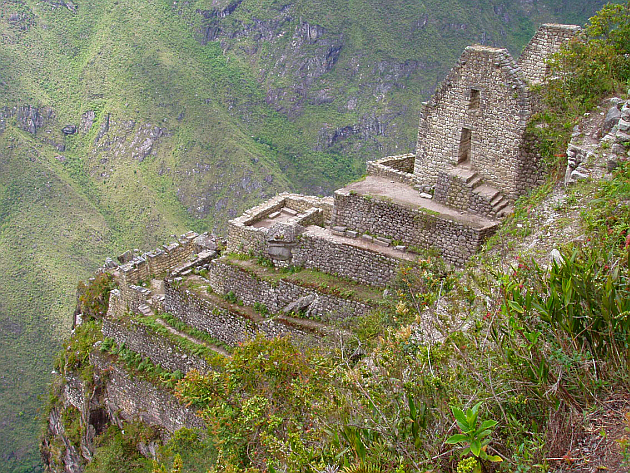
Machu Picchu stretches dangerously to the edges of cliffs... "living on the edge"...
|
|
||||||||||||||||||||||||||||||||||||||||||||||||||||||||||||||||||
 |
|||||||||||||||||||||||||||||||||||||||||||||||||||||||||||||||||||
 |
|||||||||||||||||||||||||||||||||||||||||||||||||||||||||||||||||||
 |
|||||||||||||||||||||||||||||||||||||||||||||||||||||||||||||||||||
|
|||||||||||||||||||||||||||||||||||||||||||||||||||||||||||||||||||
 |
|||||||||||||||||||||||||||||||||||||||||||||||||||||||||||||||||||