|
|||||||||||||||||||||||||||||||||||||||||||||||||||||||||||||||||||
       |
|||||||||||||||||||||||||||||||||||||||||||||||||||||||||||||||||||
Chinchero (Chincheros)Location: Rediscover Machu Picchu > Peru & the Andes > Chinchero (Chincheros) -----------------------------------------------------------------------------------------------------------------------------------------------------------------------------------------------------------------
Chinchero, the Town with the Colonial Feel...
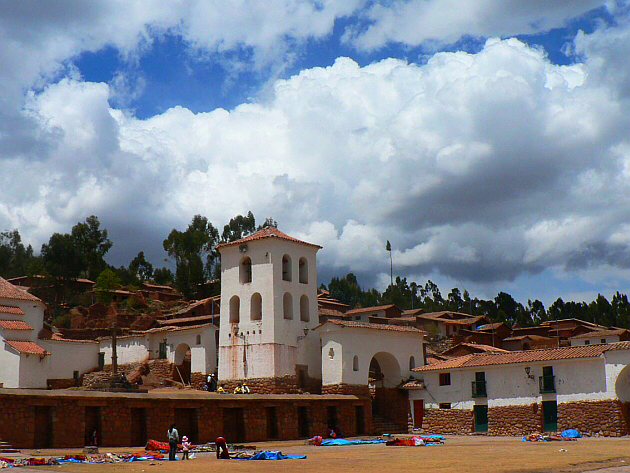
Chinchero's iconic white colonial buildings
If you will take the time to explore the region around Cuzco (Cusco), then you will find Chinchero (or Chincheros) northwest of the big city.
Chinchero is between green hills, has Inca ruins and a well-conserved medieval Spanish look... The town is one of the most beautiful ones in the Cuzco area. Chinchero is not in the Sacred Valley, but is close to it.
The height from sea level of this town is 3.762 m.
This town is often confused with another Chinchero-named town in the Apurímac Region, much further west of Cuzco.
Attractions and Activities
The town is very beautiful. We recommend you to walk on its cobbled roads, explore its details. You will see colourful houses and also parts where most of the buildings are painted in white... There even are Inca walls and old colonial Roman-Catholic churches. Some house walls are partly of Inca origin. Which makes Chincheros streets resemble Cuzco.
Chinchero Site Museum
It is close to the Plaza de Armas, where you will be able to see some beautiful Inca artifacts. There are 2 large rooms in which you will see objects of metal, stone, pottery, but even grains and plants, also photographs and a carved rock that resembles a puma. The entrance to this museum is usually free.
Plaza de Armas
The Plaza de Armas itself has an original Inca attraction: the Inca wall with trapezoidal stones.
Coricancha Archaeological Museum
Various pre-Colombian objects are displayed here. This museum has 3 rooms showing objects from the pre-Inca, Inca and colonial periods.
Colonial Church
The beautiful old colonial church is made of adobe bricks, which were placed on the foundations of an old Inca temples.
The Sunday Market
Colourful open-air market, worth visiting. Held every Sunday.
Other Attractions
Lago Piuray (Lake Piuray) is located southeast of Chinchero, only at about 2,5 km (1.5 mi) south from the town.
Stepped cultivation terraces are particularly interesting near Chinchero. They are more square-shaped and very well-maintained.
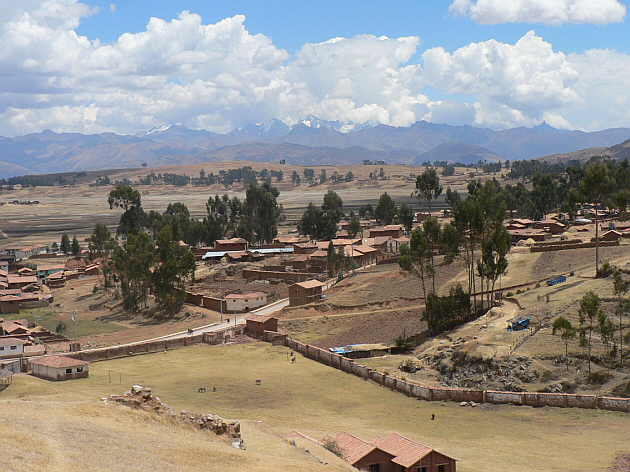
Chinchero: a typical landscape on the edge of Chinchero
History of Chinchero
The name of Chinchero comes from the word "sinchi" in Quechuan. It means "brave man". Historians say that ruler Inca Túpac Yupanqui had a residence in Chinchero, sometime in the 1480s. He ordered the construction of baths, temples where the town is today. It is said that the ruler was killed here, perhaps poisoned by his mistress, Chiqui Ocllo or Mama Ocllo.
Some believe that Chinchero was sort of a "vacation spot" of Inca Túpac Yupanqui, where the great Inca periodically retreated for relaxation.
The son of Inca Túpac Yupanqui, called Cápac Huari was held in prison for life in this town, where he died.
Manco Cápac II was fighting in the area with the Spanish colonialists in 1540, when he had ordered his followers to set fire to the town or order not to leave behind and materials or food for the arriving conquistadores. The act had helped the Incas to escape possible slaughter and further rapid advance of the Spaniards.
Chinchero is close to lakes, more correctly, lagoons: Piuray (closer and smaller) and Huaypo (larger, further away in the direction of Maras). Inca legends say that two children were turned into lakes when they were running after the Sun at the time of his setting. The legends says that Manco Cápac I (not to be confused with Manco Cápac II, who ruled 200-300 years later) was asked by the Sun itself to send his children accompany him (the Sun) at Sunset. His children were then transformed into these lakes. The Piuray Lagoon is said to have been the daughter and the Huaypo Lagoon the son of Manco Cápac I.
Getting There
Chinchero is near the road between Cuzco and Urubamba near Mt. Chicón.
Buses go there and you could also obtain a car to drive there. From Cuzco, the first village is Poroy, then Cachimayo and the next is the town of Chinchero, right after Lake Piuray (which you might not be able to see from the car).
Chinchero is at about 30 km (19 mi) from Cuzco and is can be easily reached on good roads. The duration of the road trip is around 45 minutes in one direction.
There are good accommodation possibilities. You can book in advance for whole trip packages, but perhaps the best way to see the town is to put together a short trip by yourself or with travel mates.
|
|
||||||||||||||||||||||||||||||||||||||||||||||||||||||||||||||||||
 |
|||||||||||||||||||||||||||||||||||||||||||||||||||||||||||||||||||
 |
|||||||||||||||||||||||||||||||||||||||||||||||||||||||||||||||||||
 |
|||||||||||||||||||||||||||||||||||||||||||||||||||||||||||||||||||
|
|||||||||||||||||||||||||||||||||||||||||||||||||||||||||||||||||||
 |
|||||||||||||||||||||||||||||||||||||||||||||||||||||||||||||||||||


 The best time to visit
Chinchero is on Sunday. That's when the periodical market is held too
The best time to visit
Chinchero is on Sunday. That's when the periodical market is held too